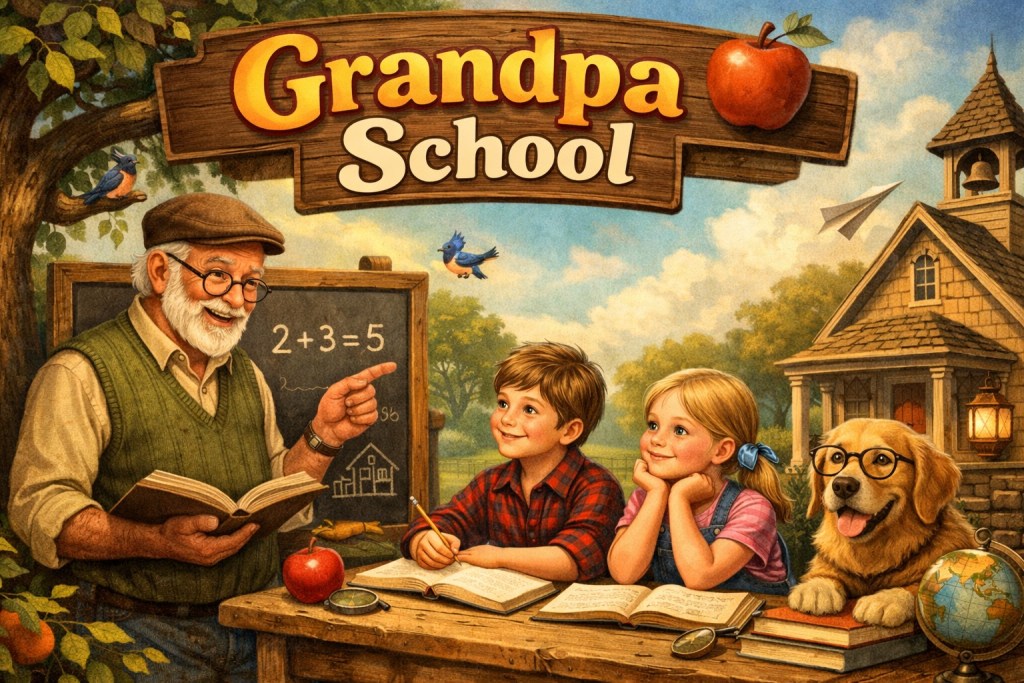
Grandfather teaching children life lessons and learning concepts in a warm Grandpa School setting symbolizing wisdom, guidance, and family connection

Grandpa School BLOG​

Explore Our Insights

Welcome to the Grandpa School blog — a collection of heartwarming stories, life lessons, and family wisdom created by C.S. Duncan, a retired U.S. Army Chief Warrant Officer and author of the Grandpa School book series. Furthermore, each story on the Grandpa School blog is designed to strengthen the bond between grandparents and grandchildren through shared reading and meaningful conversation. As a result, families find moments of connection, laughter, and growth in every post. Whether you are a grandparent, parent, teacher, or homeschool family, these stories are written for you.

What you will find on the Grandpa School blog

The Grandpa School blog features short stories that grandparents and grandchildren can read together. In addition, each story carries a life lesson rooted in the four pillars of Grandpa School — heart, hands, head, and heritage. Consequently, reading together becomes more than entertainment. Moreover, it becomes an opportunity to talk, reflect, and pass down values that last a lifetime. New stories are added regularly so there is always something fresh to discover and share.

Latest Articles and Insights

YOU ARE NOT BROKEN, YOU ARE CARRYING DAMAGE

Why Veterans Must Stop Confusing Service-Connected Injuries With Personal FailureMany veterans hold a quiet belief they rarely say out loud. “If I were stronger, this wouldn’t affect me.” Military culture rewards endurance, sacrifice, and pushing through pain. But many veterans begin to treat legitimate injuries as a personal weakness. Service-connected injuries are not a personal failure. They are damage sustained during service. PTSD is not weakness. Chronic pain is not weakness. Sleep deprivation, emotional exhaustion, and occupational impairment are not moral failures. VA claims are not about weakness either. VA compensation exists because military service often leaves lasting physical and psychological damage. OLD SARGE LESSON:You are not broken. You are carrying damage. Pretending the damage does not exist will never make it disappear.

Read More »

Why Documentation Is Critical for VA Disability Claims

Why Documentation Is Critical for VA Disability Claims Introduction Veterans frequently ask how to strengthen a VA claim or what evidence the VA needs. The answer often comes down to consistent documentation, organized medical records, and clearly showing how service-connected conditions affect daily life. Why Documentation Wins VA Claims A VA disability claim is not just paperwork. It is your injuries, sleepless nights, panic attacks, migraines, pain, missed work, and service translated into documentation. How Veterans Hurt Their Own Claims Many veterans unintentionally weaken claims by failing to document symptoms consistently or by assuming the VA will automatically understand the severity of their conditions. The Importance of Medical Evidence The VA only sees what gets documented. Strong claims are organized, specific, supported, and consistent. Medical records, treatment history, and symptom tracking help establish credibility and severity. Organizing a Strong VA Disability Claim Veterans should organize records carefully, maintain symptom journals, track occupational impact, and ensure supporting evidence clearly reflects how conditions affect daily functioning. OLD SARGE LESSON Every record tells part of your story. Document it honestly, clearly, and completely. KEY TAKEAWAY Veterans should document symptoms honestly and consistently because VA disability ratings depend on functional impairment and medical evidence. Frequently Asked Questions What is a VA C&P exam? A VA Compensation & Pension exam is a medical evaluation used to assess service-connected disabilities. What evidence helps a VA claim? Medical records, symptom journals, occupational impact notes, and consistent documentation strengthen claims. Can PTSD affect communication during exams? Yes. PTSD, anxiety, stress, and chronic pain can affect concentration, memory, and communication. Why do veterans minimize symptoms? Military culture often rewards endurance and toughness, causing many veterans to underreport symptoms. Internal Resource Home External Authority Resource https://www.va.gov/disability/how-to-file-claim/evidence-needed/ Author Bio Written by Clemons S. Duncan, retired U.S. Army Chief Warrant Officer, veteran educator, and author focused on veteran advocacy, leadership, military life, and VA disability education.  

Read More »

How Veterans Should Prepare for a VA C&P Exam

How Veterans Should Prepare for a VA C&P Exam Introduction Many veterans search online for answers about how to prepare for a VA C&P exam. Preparation matters because stress, PTSD, anxiety, chronic pain, and exhaustion can affect communication under pressure. What Is a VA C&P Exam? A Compensation & Pension exam is a medical evaluation used by the VA to assess the severity and service connection of disabilities claimed by veterans. Why Veterans Minimize Symptoms During Exams Veterans often automatically minimize symptoms during exams because military culture rewards toughness and endurance. Unfortunately, that habit can prevent examiners from fully understanding the severity of conditions. Evidence Veterans Should Bring Helpful preparation materials may include symptom journals, medication lists, flare-up notes, occupational impact statements, medical records, and organized evidence that clearly documents the condition. How PTSD and Anxiety Affect Communication PTSD, anxiety, chronic pain, and emotional exhaustion can affect memory, concentration, and communication during high-stress situations like exams. Preparation helps veterans explain their symptoms more clearly and honestly. OLD SARGE LESSON A C&P exam is not the time to prove toughness. It is the time to explain honestly what hurts, what changed, and what your life truly looks like now. KEY TAKEAWAY Veterans should document symptoms honestly and consistently because VA disability ratings depend on functional impairment and medical evidence. Frequently Asked Questions What is a VA C&P exam? A VA Compensation & Pension exam is a medical evaluation used to assess service-connected disabilities. What evidence helps a VA claim? Medical records, symptom journals, occupational impact notes, and consistent documentation strengthen claims. Can PTSD affect communication during exams? Yes. PTSD, anxiety, stress, and chronic pain can affect concentration, memory, and communication. Why do veterans minimize symptoms? Military culture often rewards endurance and toughness, causing many veterans to underreport symptoms. Internal Resource Military Leadership & Professional Development External Authority Resource https://www.va.gov/disability/ Author Bio Written by Clemons S. Duncan, retired U.S. Army Chief Warrant Officer, veteran educator, and author focused on veteran advocacy, leadership, military life, and VA disability education.
Read More »

How VA Disability Exams Evaluate Your Worst Days — Not Your Best Days

How VA Disability Exams Evaluate Your Worst Days — Not Your Best Days. Introduction Many veterans walk into VA disability exams trying to prove how capable they still are. They explain what they can still do while leaving out the exhaustion, flare-ups, panic attacks, migraines, recovery periods, and emotional strain that happen afterward. What VA Disability Examiners Look For The VA evaluates functional impairment — not toughness. Examiners are trying to understand how service-connected conditions affect your ability to work, function, sleep, concentrate, and maintain relationships. Why Veterans Downplay Symptoms Military training teaches veterans to endure discomfort and minimize pain. Unfortunately, that same mindset can quietly damage VA disability claims when veterans fail to explain the full severity of their symptoms. Functional Impairment and VA Ratings Your worst days often reveal the real impact of service-connected conditions. Missed work, migraines, panic attacks, chronic pain, sleep problems, and emotional exhaustion matter because they demonstrate the true limitations caused by disability. OLD SARGE LESSON Your best day does not define your disability. Your worst days reveal the real impact your conditions have on your life. KEY TAKEAWAY Veterans should document symptoms honestly and consistently because VA disability ratings depend on functional impairment and medical evidence. Frequently Asked Questions What is a VA C&P exam? A VA Compensation & Pension exam is a medical evaluation used to assess service-connected disabilities. What evidence helps a VA claim? Medical records, symptom journals, occupational impact notes, and consistent documentation strengthen claims. Can PTSD affect communication during exams? Yes. PTSD, anxiety, stress, and chronic pain can affect concentration, memory, and communication. Why do veterans minimize symptoms? Military culture often rewards endurance and toughness, causing many veterans to underreport symptoms. Internal Resource Home External Authority Resource https://www.benefits.va.gov/compensation/claimexam.asp Author Bio Written by Clemons S. Duncan, retired U.S. Army Chief Warrant Officer, veteran educator, and author focused on veteran advocacy, leadership, military life, and VA disability education.

Read More »

Veteran PTSD, Chronic Pain, and VA Disability: Why You Are Not Broken

Veteran PTSD, Chronic Pain, and VA Disability: Why You Are Not Broken Introduction Many veterans searching for answers about PTSD, chronic pain, anxiety, sleep deprivation, or VA disability compensation often struggle silently for years before realizing their conditions are connected to military service. Understanding service-connected disabilities is one of the first steps toward healing and proper VA claim preparation. Why Veterans Minimize Service-Connected Injuries Military culture rewards endurance, sacrifice, and pushing through pain. Many veterans quietly believe that if they were stronger, their injuries would not affect them. Over time, legitimate physical and emotional injuries become confused with personal weakness. PTSD and Chronic Pain Are Not Personal Failures PTSD is not weakness. Chronic pain is not weakness. Sleep deprivation, emotional exhaustion, anxiety, and occupational impairment are not moral failures. These conditions are often the direct result of military service and repeated exposure to stress, trauma, and physical wear. Why VA Disability Compensation Exists VA compensation exists because military service frequently leaves lasting physical and psychological damage. The VA disability system was created to recognize the long-term impact service can have on veterans and their families. OLD SARGE LESSON You are not broken. You are carrying damage. Pretending the damage does not exist will never make it disappear. KEY TAKEAWAY Veterans should document symptoms honestly and consistently because VA disability ratings depend on functional impairment and medical evidence. Frequently Asked Questions What is a VA C&P exam? A VA Compensation & Pension exam is a medical evaluation used to assess service-connected disabilities. What evidence helps a VA claim? Medical records, symptom journals, occupational impact notes, and consistent documentation strengthen claims. Can PTSD affect communication during exams? Yes. PTSD, anxiety, stress, and chronic pain can affect concentration, memory, and communication. Why do veterans minimize symptoms? Military culture often rewards endurance and toughness, causing many veterans to underreport symptoms. Internal Resource Military Leadership & Professional Development External Authority Resource https://www.ptsd.va.gov/ Author Bio Written by Clemons S. Duncan, retired U.S. Army Chief Warrant Officer, veteran educator, and author focused on veteran advocacy, leadership, military life, and VA disability education.

Read More »
“Chloe talking with her grandfather about courage and resilience at the kitchen table”

What Chloe Learned About Resilience

A Grandpa School Story About Courage, Emotional Resilience, and the Power of Grandparent Love There was a quietness about Chloe when she came home from school that Tuesday. Not the loud kind of upset. The softer kind. She sat at the kitchen table, slowly moving her after-school snack around without eating it. I sat across from her and waited. Over the years, I’ve learned something important about children: sometimes the greatest gift you can give them is simply staying present long enough for their silence to feel safe. Finally, she spoke. “Jaylen said I wasn’t brave.” I looked at her gently. “Why did he say that?” “Because I didn’t want to jump off the high dive.” She picked up a cracker, then set it back down again. “He said only babies are scared of it.” For a moment, neither of us said anything. Then I asked her a question that surprised her. “Do you know why some children become more resilient than others?” She shook her head. The Powerful Role Grandparents Play in Building Resilience “Research in child development and family psychology shows that one of the strongest influences on a child’s emotional resilience can come from their grandparents.” Her eyes widened. “Us?” “You specifically didn’t give yourself that gift,” I said with a smile. “But relationships like ours help build it.” Researchers studying intergenerational relationships have found that children who experience consistent emotional support from grandparents often develop stronger coping skills, greater emotional security, and improved confidence when facing difficult situations. The unconditional love many grandparents provide creates what psychologists sometimes describe as an emotional safety net — not one that prevents every fall, but one that helps children feel safer taking healthy risks in the first place. Why Unconditional Love Helps Children Become Brave A strong grandparent-grandchild relationship has also been associated with lower emotional distress and fewer risky behaviors during adolescence. Experts believe this often comes from the powerful sense of belonging children feel when they know they are deeply loved and accepted without conditions. And there is something else researchers continue to notice. Grandparents often play an important role in language development and storytelling. Not because grandparents know more than parents, but because they often have more patience, more life experience, and more time to slow down long enough to tell the stories children remember for the rest of their lives. Chloe listened carefully. “So we’re braver because of you?” “You are braver,” I told her softly, “partly because you know you are loved by someone who has lived through difficult things and is still here smiling afterward. That kind of love travels with you, even when I’m not beside you.” Chloe’s Decision at the High Dive She thought about that quietly. Then she looked up at me with that small, determined expression I love most in the world. “I think I’m going to try the high dive on Saturday.” I smiled. “I think you might.” And I made a quiet promise to myself to be there when she did. Grandpa School Lesson “The bravest children in the room often carry courage that was quietly planted by someone who loved them unconditionally.” Reflection Question Can you remember a moment when the love or encouragement of a grandparent helped you face something difficult? Try This Together (Grandpa School Activity) Tell your grandchild about a time when you were afraid but chose to do the hard thing anyway. Help them understand that courage is not the absence of fear — it is what we choose to do after fear arrives. Quote for Sharing “Unconditional love doesn’t just comfort children. It helps build resilient hearts.”

Read More »

For more family reading inspiration, visit Reading Rockets — a trusted resource for families who love reading together.

Explore the full Grandpa School series of lessons and activities. In addition, download your free activity guides or browse all books by C.S. Duncan to find the perfect story for your family.

Scroll to Top