
Complete STEM Curriculum • Ages 6–12

Aviation for Kids
A complete 40-lesson STEM curriculum that teaches children how airplanes fly — through hands-on experiments, real-world aviation concepts, and structured lessons built by a retired military helicopter pilot.
40
Lessons
129
Slides
4
Sections
2
Exam Levels


Aviation for Kids is a complete 40-lesson STEM curriculum by C.S. Duncan Books that teaches children ages 6–12 how airplanes fly. Created by C.S. Duncan, a retired U.S. Army helicopter pilot with 24 years of service, the curriculum covers flight fundamentals, aircraft parts, navigation, weather, safety, and aviation careers. It includes two leveled student workbooks, an instructor guide, 129 slides, two final exams, an answer key, and a Junior Aviator certificate. Aligned with NGSS and CCSS standards. Available at csduncanbooks.com.
Overview
The Aviation for Kids STEM Program is a complete, step-by-step curriculum that teaches children ages 6–12 the fundamentals of flight. Through 40 structured lessons, students learn how airplanes fly, explore aircraft parts and systems, study aviation history, and connect flight to broader STEM concepts like physics, engineering, and mathematics.
Created by C.S. Duncan — a disabled veteran and former military leader with real-world aviation experience — the program is designed to be taught by any parent, teacher, or educator with no prior aviation knowledge required.

Flight Fundamentals
The four forces of flight, lift, thrust, drag, gravity, how airplanes take off, cruise, and land. The physics of why flight works.

Aircraft Parts & Control
Airplane components, cockpit instruments, engines, wings, landing gear, control surfaces — roll, pitch, yaw, flaps, and ailerons.

Systems & Operations
Elevators, rudder, fuel systems, weight and balance, navigation, communication, ATC, airports, runways, and taxiways.

Weather, Safety & Future
Weather, wind, turbulence, clouds, storms, visibility, icing, decision making, aviation careers, and the future of flight.
Every Lesson Includes
How Each Lesson Works
Every lesson follows the same repeatable 10-section format — designed for engagement, retention, and real learning.
Big Idea
Core concept in one sentence
What to Know
Age-leveled explanation
Guided Practice
3 questions with answers
Draw It
Visual learning activity
Try It
Hands-on experiment
Real World
Aviation connection
Think About It
Critical thinking
Vocabulary
5 key terms per lesson
Quick Check
Assessment questions
Extension
Challenge activity

Built by an Aviation Professional
Created by a Retired Military Helicopter Pilot
This curriculum was developed by C.S. Duncan — a retired U.S. Army aviator with 24 years of service, including special operations aviation, aircraft accident investigation for NAVAIR, and teaching aeronautics at Embry-Riddle Aeronautical University.
Every lesson reflects how aviation is actually taught — simplified for young learners, but grounded in real-world principles.

Latest Articles
Aviation Lessons & Activities
Every lesson follows the same repeatable 10-section format — designed for engagement, retention, and real learning.
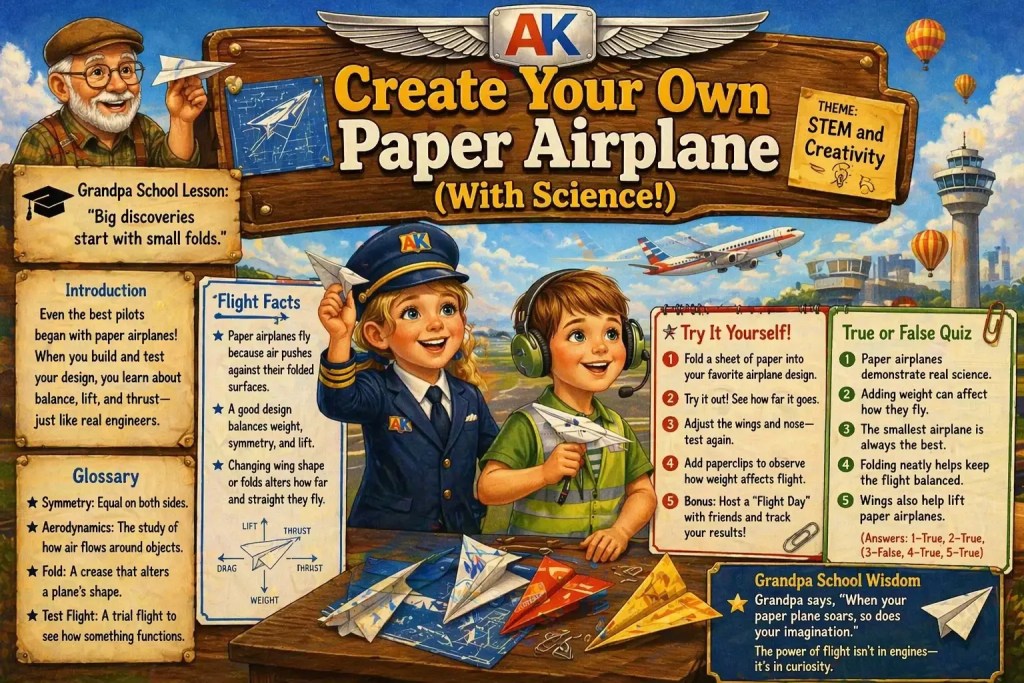
Create Your Own Paper Airplane (With Science!)
Build, fly, test, repeat! Learn how lift, balance, and weight affect flight.
Air Traffic Control for Kids
Safety and teamwork — how voices in the sky keep every flight safe.

What's Inside a Cockpit?
Step inside the pilot's world — instruments, screens, pedals, and controls

The Four Forces of Flight Game
Turn physics into play — lift, thrust, drag, and gravity in action.

Common Questions
Common Questions About the Program
What is the Aviation for Kids STEM curriculum?
What are the four forces of flight?
What ages is this designed for?
What is included in the teaching kit?
Is this aligned with educational standards?
Who created this curriculum?
Let Their Dreams Take Flight
If a student completes all 40 lessons, they will understand how airplanes fly better than most adults.