Old Sarge Blog

Welcome to the Old Sarge Blog — a place where hard-earned military wisdom meets real life after service.

Written by retired Army Chief Warrant Officer Clemons S. “Mike” Duncan, the Old Sarge Blog speaks honestly about military life, veteran struggles, leadership, resilience, family, VA benefits, mental health, and the lifelong lessons learned through service and sacrifice.

This is not polished corporate advice.
It is straightforward guidance built from experience:

  • combat readiness,
  • leadership,
  • failure,
  • recovery,
  • discipline,
  • transition,
  • and rebuilding life after the uniform.

The Old Sarge Blog exists to help veterans, military families, and younger generations understand that strength is not the absence of struggle — it is learning how to carry the weight without losing yourself.

Topics include:

  • Veteran life and transition
  • VA disability and benefits education
  • PTSD, burnout, and emotional recovery
  • Military leadership lessons
  • Family and marriage under military pressure
  • Personal responsibility and resilience
  • Life lessons from decades of service

Whether you served for four years or thirty, Old Sarge is here to remind you:
You are not alone, your service mattered, and wisdom earned through hardship still has value.

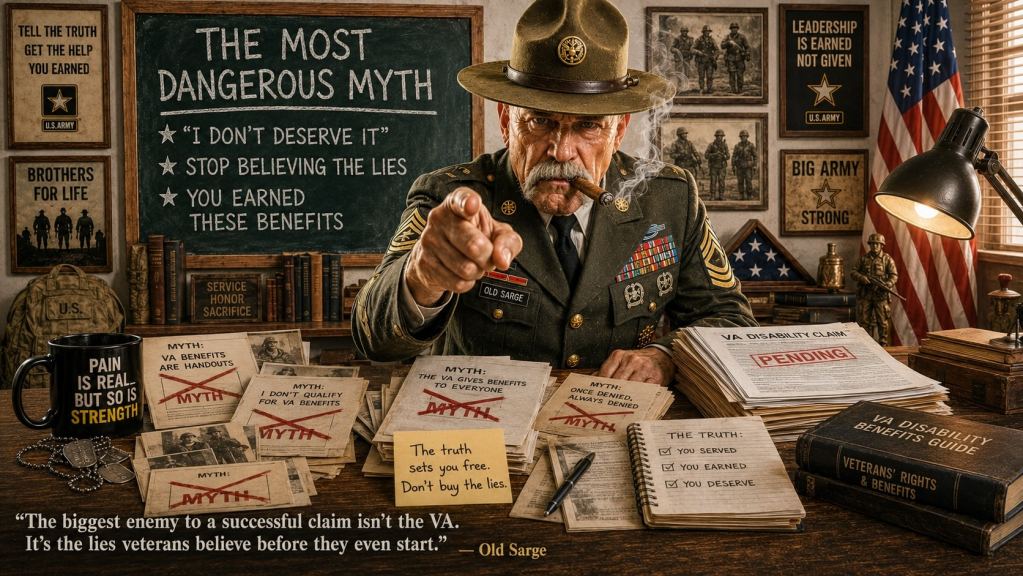
Old Sarge points toward the viewer from his military office while teaching veterans about the most dangerous myth veterans believe about va claims.
Old Sarge Blog

The Most Dangerous Myth Veterans Believe About VA Claims

Many veterans struggle to understand the most dangerous myth veterans believe about VA claims. The VA system is complex, and misinformation often causes veterans to delay, underreport symptoms, or walk away from benefits they earned through service. This myth perpetuates the idea that veterans must suffer in silence, leading to a significant number of unfiled claims. In reality, understanding the VA process is crucial for accessing the benefits that can support veterans’ health and well-being. Why This Matters Understanding the myths surrounding VA claims is crucial for veterans. One common misconception is that if a veteran’s claim is denied, it will always be denied. In reality, many veterans are able to successfully appeal denied claims by providing additional evidence or clarification on their conditions. The Importance of Accurate Information Moreover, sharing experiences with other veterans can help combat feelings of isolation and foster a community where veterans can learn from each other’s experiences regarding VA claims. Support groups and online forums can be a valuable resource for guidance and encouragement. Access to correct information about VA claims is vital for veterans. Many organizations, including veteran service organizations (VSOs), provide resources to educate veterans about their benefits. Engaging with these organizations can help clarify doubts and provide a support system for navigating the claims process. For example, a veteran might attend a workshop on how to file a claim, which could empower them to take action instead of feeling overwhelmed by the process. Educating oneself about ‘The Most Dangerous Myth Veterans Believe About VA Claims’ can help veterans avoid common pitfalls and seek the support they need. Additionally, veterans should be aware of the potential impact of their benefits on family members. Spouses and dependent children may also be eligible for benefits, including education assistance and healthcare coverage, which can alleviate some of the financial burdens faced by veterans and their families. The impact of this myth is profound, with many veterans feeling isolated and unsupported. This section will explore the importance of acknowledging mental health challenges and how they affect the overall quality of life. Veterans often come from a culture that prioritizes strength and resilience, often at the expense of their own mental health. Failing to seek help or report symptoms can lead to worsening conditions over time. It’s vital for veterans to realize that seeking assistance is not a sign of weakness but a necessary step towards recovery and improved quality of life. Furthermore, veterans should be proactive in educating themselves about the types of evidence that can support their claims. This includes obtaining copies of service records, medical evaluations, and personal statements detailing how conditions affect their daily lives. Taking action against ‘The Most Dangerous Myth Veterans Believe About VA Claims’ can empower veterans to seek the benefits and support they need. Military culture teaches endurance, discipline, and pushing through pain. Unfortunately, those same habits often prevent veterans from properly documenting conditions or seeking help when they need it. It’s essential to highlight stories of veterans who have overcome these obstacles by challenging the myth and actively pursuing their claims. By doing so, they have not only improved their own lives but also set an example for others who may be struggling in silence. Moreover, staying informed about changes in VA policy and procedures is vital, as these changes can affect the benefits available to veterans. Subscribing to newsletters from veteran organizations or the VA can help keep veterans updated. The Long-Term Impact Lastly, continuing education on veteran rights and benefits is essential. Workshops, seminars, and online courses can provide veterans with the tools they need to advocate for themselves effectively and understand the nuances of the VA claims process. The narrative surrounding ‘The Most Dangerous Myth Veterans Believe About VA Claims’ must be changed to empower veterans in their claims process. VA benefits affect more than monthly compensation. They can affect healthcare, housing, education, dependent support, property tax relief, dental care, and long-term financial stability for entire families. This section illustrates how not addressing claims can lead to a cycle of poverty and lack of access to necessary healthcare. It can also discuss real-life consequences faced by veterans who chose to ignore their needs versus those who sought help and how it changed their trajectories. Understanding and confronting ‘The Most Dangerous Myth Veterans Believe About VA Claims’ allows veterans to advocate more effectively for their rights. VA benefits affect more than monthly compensation. They can affect healthcare, housing, education, dependent support, property tax relief, dental care, and long-term financial stability for entire families. For example, education benefits can help veterans pursue higher education, leading to better job opportunities, while healthcare benefits ensure they receive necessary medical treatment for service-related conditions. Understanding the full scope of VA benefits can empower veterans to take control of their future. Do I need perfect records? No. Buddy statements, medical opinions, and treatment records can help support claims. Additionally, personal testimonies detailing how service-related conditions have affected daily life can be powerful. Common Mistakes Veterans Make Why does documentation matter? The VA evaluates evidence, medical records, and functional impairment when assigning ratings. Comprehensive documentation is key to ensuring a fair assessment of claims. Many veterans wait too long, fail to document symptoms, miss deadlines, or assume they do not qualify. Others underestimate secondary conditions or fail to prepare properly for C&P exams. This section will delve into specific examples of these mistakes, including personal anecdotes from veterans who learned the hard way. By sharing their experiences, other veterans can better prepare and avoid making similar errors in their claim process. Remember, the journey through the VA claims process can be challenging, but it is important to advocate for yourself and your rights. Stay persistent, gather all necessary documentation, and reach out for support when needed. By doing so, you can increase your chances of receiving the benefits you have earned through your service. For a comprehensive resource on va disability claims, visit VA Disability. This site offers valuable information on benefits, eligibility,

Old Sarge standing in a bright veteran claim office surrounded by organized VA paperwork, medical evidence binders, symptom journals, and disability claim documentation.
Old Sarge Blog

YOU ARE NOT BROKEN, YOU ARE CARRYING DAMAGE

Why Veterans Must Stop Confusing Service-Connected Injuries With Personal FailureMany veterans hold a quiet belief they rarely say out loud. “If I were stronger, this wouldn’t affect me.” Military culture rewards endurance, sacrifice, and pushing through pain. But many veterans begin to treat legitimate injuries as a personal weakness. Service-connected injuries are not a personal failure. They are damage sustained during service. PTSD is not weakness. Chronic pain is not weakness. Sleep deprivation, emotional exhaustion, and occupational impairment are not moral failures. VA claims are not about weakness either. VA compensation exists because military service often leaves lasting physical and psychological damage. OLD SARGE LESSON:You are not broken. You are carrying damage. Pretending the damage does not exist will never make it disappear.

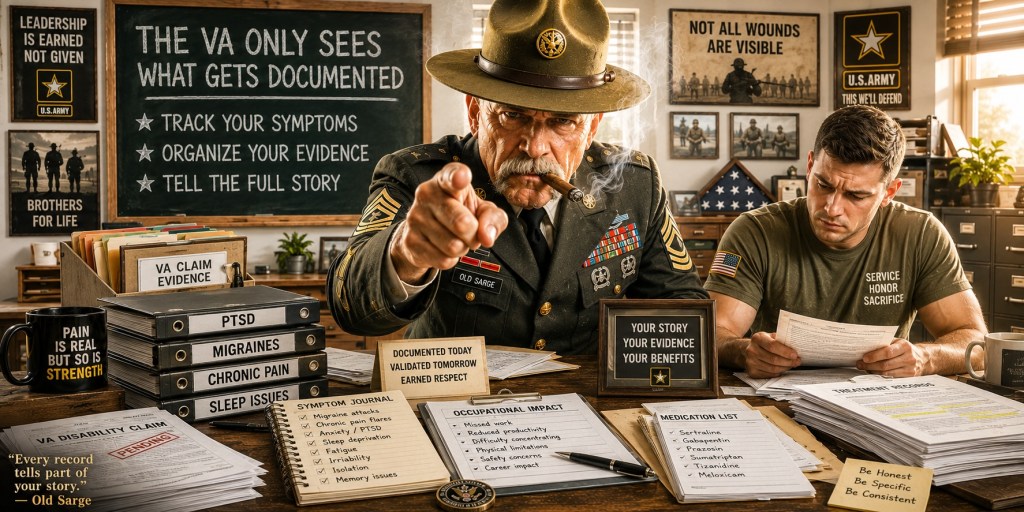
Old Sarge mentoring a younger veteran inside a well-lit VA claim preparation office filled with medical records, symptom journals, and organized evidence for a VA C&P exam.
Old Sarge Blog

Why Documentation Is Critical for VA Disability Claims

Why Documentation Is Critical for VA Disability Claims Introduction Veterans frequently ask how to strengthen a VA claim or what evidence the VA needs. The answer often comes down to consistent documentation, organized medical records, and clearly showing how service-connected conditions affect daily life. Why Documentation Wins VA Claims A VA disability claim is not just paperwork. It is your injuries, sleepless nights, panic attacks, migraines, pain, missed work, and service translated into documentation. How Veterans Hurt Their Own Claims Many veterans unintentionally weaken claims by failing to document symptoms consistently or by assuming the VA will automatically understand the severity of their conditions. The Importance of Medical Evidence The VA only sees what gets documented. Strong claims are organized, specific, supported, and consistent. Medical records, treatment history, and symptom tracking help establish credibility and severity. Organizing a Strong VA Disability Claim Veterans should organize records carefully, maintain symptom journals, track occupational impact, and ensure supporting evidence clearly reflects how conditions affect daily functioning. OLD SARGE LESSON Every record tells part of your story. Document it honestly, clearly, and completely. KEY TAKEAWAY Veterans should document symptoms honestly and consistently because VA disability ratings depend on functional impairment and medical evidence. Frequently Asked Questions What is a VA C&P exam? A VA Compensation & Pension exam is a medical evaluation used to assess service-connected disabilities. What evidence helps a VA claim? Medical records, symptom journals, occupational impact notes, and consistent documentation strengthen claims. Can PTSD affect communication during exams? Yes. PTSD, anxiety, stress, and chronic pain can affect concentration, memory, and communication. Why do veterans minimize symptoms? Military culture often rewards endurance and toughness, causing many veterans to underreport symptoms. Internal Resource Home External Authority Resource https://www.va.gov/disability/how-to-file-claim/evidence-needed/ Author Bio Written by Clemons S. Duncan, retired U.S. Army Chief Warrant Officer, veteran educator, and author focused on veteran advocacy, leadership, military life, and VA disability education.  

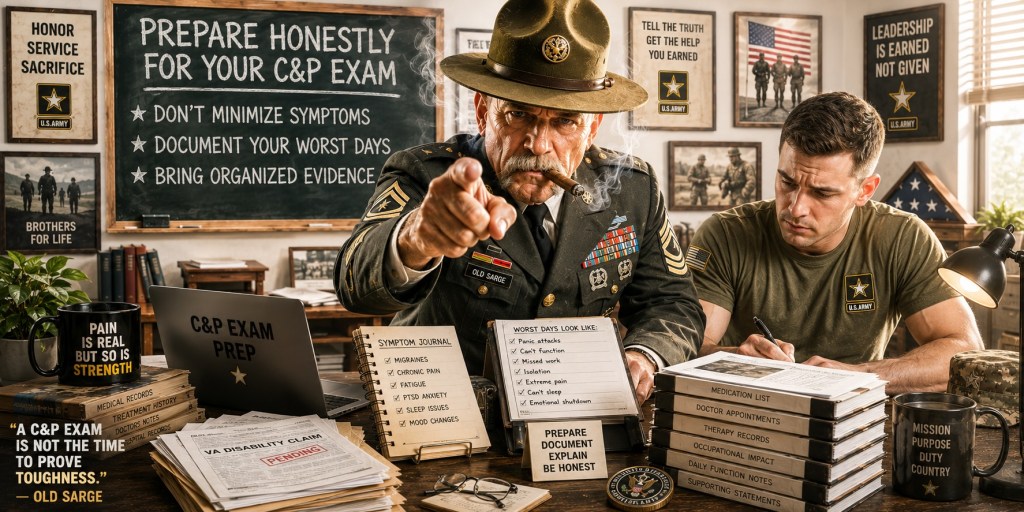
Old Sarge mentoring a younger veteran inside a well-lit VA claim preparation office filled with medical records, symptom journals, and organized evidence for a VA C&P exam.
Old Sarge Blog

How Veterans Should Prepare for a VA C&P Exam

How Veterans Should Prepare for a VA C&P Exam Introduction Many veterans search online for answers about how to prepare for a VA C&P exam. Preparation matters because stress, PTSD, anxiety, chronic pain, and exhaustion can affect communication under pressure. What Is a VA C&P Exam? A Compensation & Pension exam is a medical evaluation used by the VA to assess the severity and service connection of disabilities claimed by veterans. Why Veterans Minimize Symptoms During Exams Veterans often automatically minimize symptoms during exams because military culture rewards toughness and endurance. Unfortunately, that habit can prevent examiners from fully understanding the severity of conditions. Evidence Veterans Should Bring Helpful preparation materials may include symptom journals, medication lists, flare-up notes, occupational impact statements, medical records, and organized evidence that clearly documents the condition. How PTSD and Anxiety Affect Communication PTSD, anxiety, chronic pain, and emotional exhaustion can affect memory, concentration, and communication during high-stress situations like exams. Preparation helps veterans explain their symptoms more clearly and honestly. OLD SARGE LESSON A C&P exam is not the time to prove toughness. It is the time to explain honestly what hurts, what changed, and what your life truly looks like now. KEY TAKEAWAY Veterans should document symptoms honestly and consistently because VA disability ratings depend on functional impairment and medical evidence. Frequently Asked Questions What is a VA C&P exam? A VA Compensation & Pension exam is a medical evaluation used to assess service-connected disabilities. What evidence helps a VA claim? Medical records, symptom journals, occupational impact notes, and consistent documentation strengthen claims. Can PTSD affect communication during exams? Yes. PTSD, anxiety, stress, and chronic pain can affect concentration, memory, and communication. Why do veterans minimize symptoms? Military culture often rewards endurance and toughness, causing many veterans to underreport symptoms. Internal Resource Military Leadership & Professional Development External Authority Resource https://www.va.gov/disability/ Author Bio Written by Clemons S. Duncan, retired U.S. Army Chief Warrant Officer, veteran educator, and author focused on veteran advocacy, leadership, military life, and VA disability education.

Old Sarge Army First Sergeant pointing toward the viewer inside a bright VA counseling office while explaining that VA disability exams evaluate a veteran’s worst days, including PTSD, chronic pain, migraines, fatigue, and functional impairment.
Old Sarge Blog

How VA Disability Exams Evaluate Your Worst Days — Not Your Best Days

How VA Disability Exams Evaluate Your Worst Days — Not Your Best Days. Introduction Many veterans walk into VA disability exams trying to prove how capable they still are. They explain what they can still do while leaving out the exhaustion, flare-ups, panic attacks, migraines, recovery periods, and emotional strain that happen afterward. What VA Disability Examiners Look For The VA evaluates functional impairment — not toughness. Examiners are trying to understand how service-connected conditions affect your ability to work, function, sleep, concentrate, and maintain relationships. Why Veterans Downplay Symptoms Military training teaches veterans to endure discomfort and minimize pain. Unfortunately, that same mindset can quietly damage VA disability claims when veterans fail to explain the full severity of their symptoms. Functional Impairment and VA Ratings Your worst days often reveal the real impact of service-connected conditions. Missed work, migraines, panic attacks, chronic pain, sleep problems, and emotional exhaustion matter because they demonstrate the true limitations caused by disability. OLD SARGE LESSON Your best day does not define your disability. Your worst days reveal the real impact your conditions have on your life. KEY TAKEAWAY Veterans should document symptoms honestly and consistently because VA disability ratings depend on functional impairment and medical evidence. Frequently Asked Questions What is a VA C&P exam? A VA Compensation & Pension exam is a medical evaluation used to assess service-connected disabilities. What evidence helps a VA claim? Medical records, symptom journals, occupational impact notes, and consistent documentation strengthen claims. Can PTSD affect communication during exams? Yes. PTSD, anxiety, stress, and chronic pain can affect concentration, memory, and communication. Why do veterans minimize symptoms? Military culture often rewards endurance and toughness, causing many veterans to underreport symptoms. Internal Resource Home External Authority Resource https://www.benefits.va.gov/compensation/claimexam.asp Author Bio Written by Clemons S. Duncan, retired U.S. Army Chief Warrant Officer, veteran educator, and author focused on veteran advocacy, leadership, military life, and VA disability education.

Scroll to Top